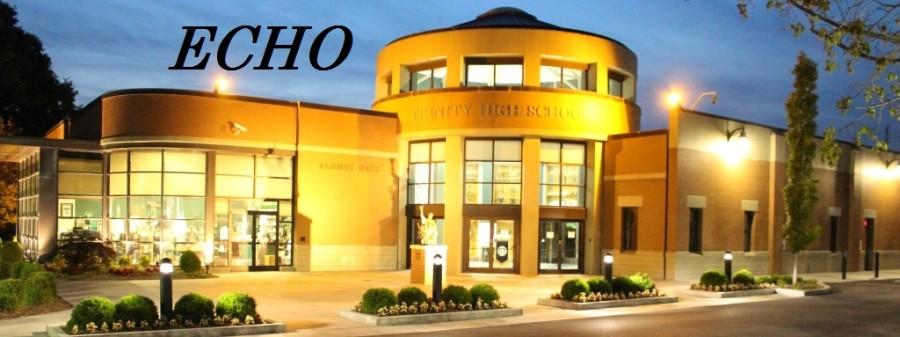

At Trinity, learning a language is more than just a class; it is an experience. Language teachers at Trinity don’t structure their classes around memorizing words and phrases. Instead, they open the door for students to learn about new cultures and discover new opportunities. Three Trinity teachers who understand this are Spanish teachers Jorge Serrano, Walter Mata and Gioconda Sparling. To learn more about how these teachers bring their cultures to life, each shared insight into their classroom experiences.
Jorge Serrano
Originally from Colombia, Serrano brings his heritage and life experiences into the classroom each day. “Colombia is a different country. The culture is different than the United States,” Mr. Serrano explained.  After moving to the U.S. at age 35, he faced challenges learning a new language and starting a new life with his family. Those experiences now help him connect with his students on a deeper level. “I really enjoy teaching because I have the opportunity to interact with my students and give them the cultural differences and perspectives,” he said.
In his classroom, Mr. Serrano uses culture as a way to make learning Spanish come alive. “There are many activities that we do in class. Students have to research different countries, families, lifestyles, food, politics and music.” Through these projects and discussions, his students gain a broader view of the world and learn that “there is not only one world, there is a world that is built with many cultures.” Mr. Serrano has shown that lessons, personal stories and even sharing his favorite Colombian foods help his students appreciate the diversity of the Spanish-speaking world.
Walter Mata
Originally from El Salvador, Mr. Mata’s journey from a small town during a time of civil war to a classroom in Louisville is one of resilience and dedication. “When I was young, it was a fun place to grow up,” he said, recalling his hometown of Santiago de María, where he sang in the church choir with St. 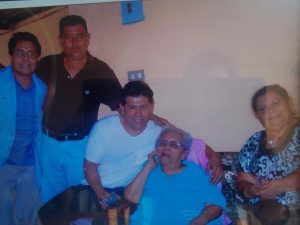 Óscar Romero. Mata earned his first degree in math and physics from a university in El Salvador and became a high school teacher. He later received a full scholarship to study mathematics at the University of Louisville, where he faced the challenge of learning English and adapting to a new culture. “The hardest part was the language; you come over here not knowing anybody and have to learn everything new.” Despite the challenges, Mata’s experiences have shaped him into a compassionate educator.
In his classroom, Mr. Mata strives to create meaningful relationships with his students while sharing his love for learning. Over the years, he has taught both Spanish and algebra, but what he values most is “seeing when the kids actually understand something and become passionate about it.” For him, teaching goes beyond academics; it is about connection. “Teaching is not just coming to teach, but creating a good relationship, a good bond with the students,” he said. Many of his former students still visit or reach out years later, some even bringing their own children to his class. Though he now lives in the United States, Mata stays closely connected to El Salvador, visiting his family there at least once a year. Through his lessons and his example, he continues to show his students the power of education, perseverance and cultural pride.
Gioconda Sparling
Originally from Ecuador, Ms. Sparling brings her culture and energy into every Spanish class she teaches. “I come from a family of teachers. My older brothers are teachers, and I really got inspired to just work with children.” Growing up in Ecuador, she described her childhood as a “really happy time,” 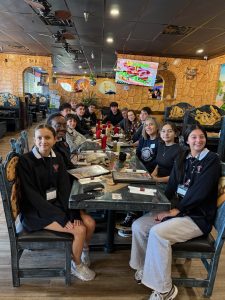 filled with close friends, time spent outdoors and the safety of a close-knit community. Moving to the United States came with challenges, adjusting to new food, language and weather. “At the beginning, I felt like part of my life was in a suitcase,” she said, recalling the difficulty of leaving home while embracing a new culture. But those experiences shaped her into the passionate educator she is today.
In her classroom, Ms. Sparling creates an environment that celebrates both the Spanish language and the diverse cultures behind it. “I like to share my customs and my language with my students,” she said. “It’s very important for me that they know where we come from and the challenges we bring here.” Her classroom is decorated with Ecuadorian flags and pictures of her family and hometown, giving students a personal connection to her heritage. She often goes beyond the textbook, sharing real-life stories and organizing projects on Ecuadorian food and traditions. Through these experiences, Ms. Sparling helps her students see Spanish as a window into the lives and stories of people across the world.
Outro
Together, Mr. Serrano, Mr. Mata and Ms. Sparling show that teaching Spanish at Trinity is about more than grammar and vocabulary. Each teacher brings their own culture, background and experiences to the classroom, helping students see the world through a broader lens. Their lessons do not just teach a language; they teach students to understand and appreciate the diversity of the world around them. Through their passion and dedication to their home countries, these teachers remind students that language connects people in ways that go far beyond words.