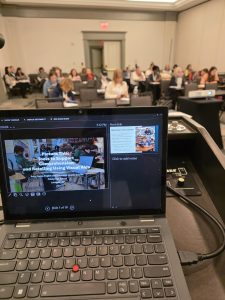
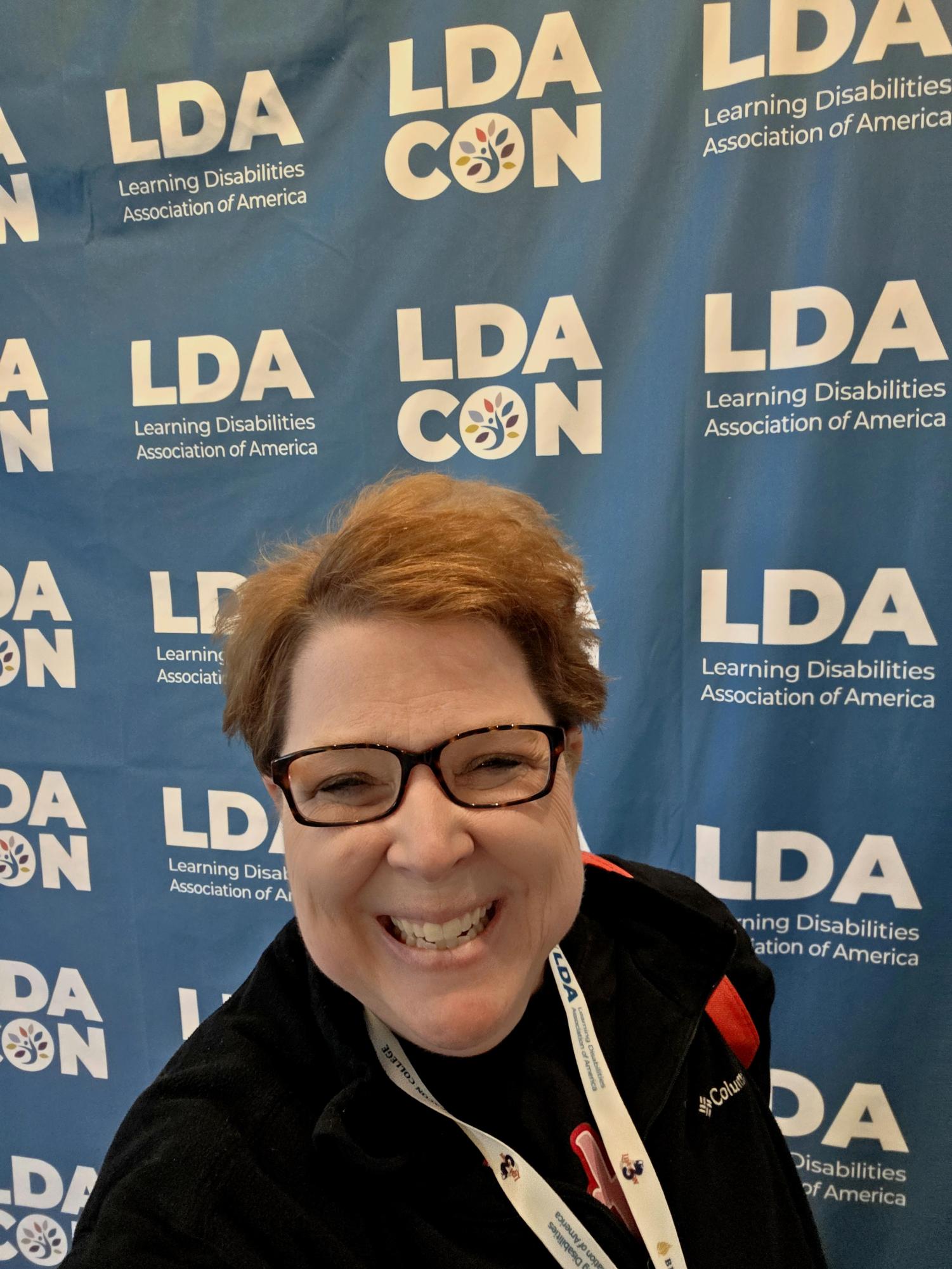
At the Learning Disabilities Association Conference, held Feb. 15–18, 2026 in St. Louis, educators, parents, and advocates gathered to share research-based strategies designed to support individuals with learning disabilities. Among the featured presenters was Trinity High School teacher, Mrs. Elizabeth Darby. She delivered a dynamic mini-session titled “Picture This: Tools to Support Comprehension and Retelling Using Visual Aids.” This marks the second time Darby has presented at the Learning Disabilities Association’s national conference, having previously presented in 2012.
Mrs. Darby’s session focused on a challenge familiar to many educators: helping students with learning differences strengthen reading comprehension and recall. Grounded in lived classroom experience and supported by research, her presentation demonstrated how visual supports can significantly reduce cognitive load and improve retention.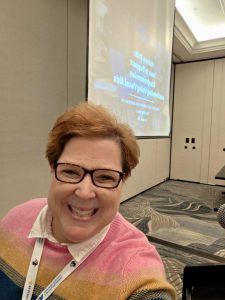
Drawing on Richard E. Mayer’s multimedia learning theory and research in special education practices, Mrs. Darby explained that students learn more effectively when words and images are combined rather than presented in isolation. She also highlighted findings from Learning Disabilities Research & Practice showing that story-mapping strategies improve students’ ability to recall narrative elements like setting, plot, and character development.
Participants explored practical, ready-to-implement strategies for breaking down story elements into manageable parts using images, icons, and structured slide layouts. Mrs. Darby emphasized that visuals are not decorative extras but essential tools that help move information from short-term to long-term memory. By making meaningful connections through imagery, students are better able to retell stories, track plot development, and engage more confidently with complex texts.
With twenty-two years of teaching experience, seventeen of those working with students with learning differences at Trinity, Mrs. Darby shared real classroom examples involving students with ADHD, dyslexia, executive functioning challenges, autism, language processing, and sensory disorders. Her session provided hands-on opportunities for attendees to design their own visual aids, ensuring they left with practical tools they could implement immediately.
As LDA CON63 concluded, Mrs. Darby’s message resonated clearly: when educators intentionally pair words with visuals, they open new pathways to understanding. For students who struggle with traditional text-heavy instruction, sometimes the most powerful strategy is simply to “picture this.”